
This blog post is the part of a multi-part series about the eternal spiritual
message: Know Your Self.
Soul is one of the most used words in the English language. But what does it really mean. If you ask many people, you are likely to get many different answers — or even no answer. Examining the definitions of soul in seven world religions provides clues to why the definition of this simple little word is so fraught with confusion.
In a recent online spiritual gathering I attended, someone asked a question that likely bedevils all of us at some point our life. What is the difference between our soul and our spirit?
Three presenters at this meeting struggled to give a clear, definitive answer. In fact, their answers were so vague and meandering that I’ve forgotten their final answer.
So, I decided to do my own research. After all, there must be a simple, clear answer on the definition of the soul. Right? Wrong. What I discovered while searching for answers in the seven leading esoteric religions is that there is no easy answer to this question.
Here are highlights of what I discovered from seven religions. See what resonates with your inner essence.
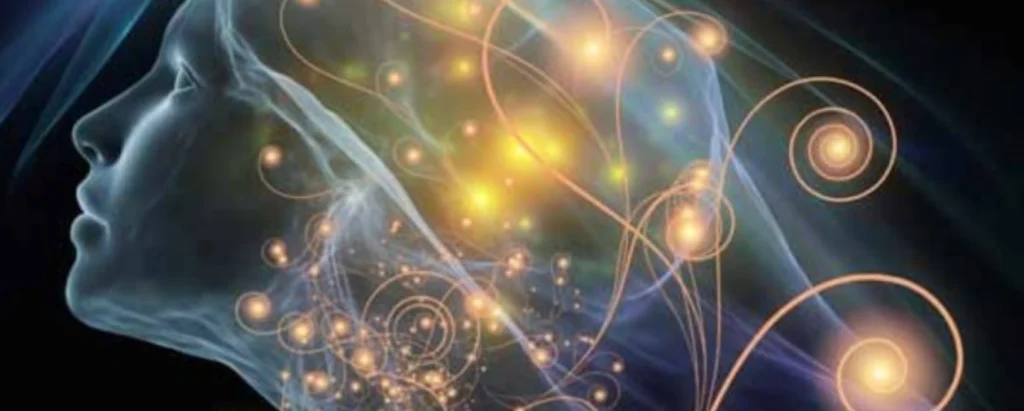
While there are many branches of Gnosticism, they tend to share similar views on many aspects of spirituality. When it comes the soul, the consensus is that it is a spark of the divine essence. In fact, we humans are a microcosm of the divine macrocosm. Many people use the analogy of a finite wave (soul) on the vast eternal ocean (God).
Further, most Gnostic groups believe that the human soul is essentially caught in a trap between our pure divine self (spirit body) and our earthly self (flesh body). The goal of humans is to return to our original home via the acquisition of gnosis (mystical spiritual wisdom).
According to a study published in the Journal of Gnostic Studies, the Nag Hammadi Library (Gnostic texts found hidden in a cave in Egypt in 1945) included a fragment of a Hermetic treatise by Asclepius, the son of Apollo.
He stated that
“man has a double nature. It includes a nature that is simple and divine called ‘essential.’
It is the divine and immortal spiritual soul, which is a form of divine likeness. Man also has a material body that is formed out of the four elements (fire, water, air, earth).” Asclepius describes the higher quality of humans’ essential aspect — their soul — as divine, eternal, and substantial.
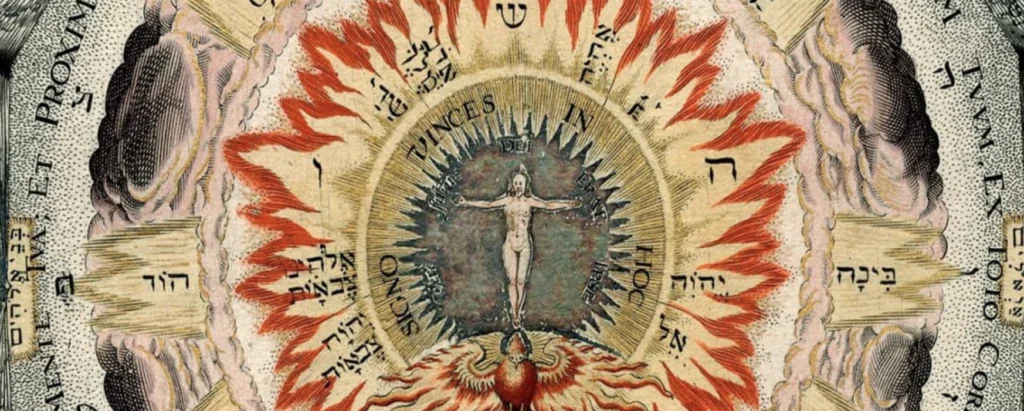
In Kabbalah, there are five levels of the soul. A metaphor to understand the relationship between the five levels is to imagine an artisan glassblower who decides to create a gorgeous glass vase.
A study, Where in this World is the Human Soul?, cites an ancient Jewish poem from the Vilna Siddur of 1615 prayerbook:
“Blessed are you, LORD our God, King of the universe,
who formed man in wisdom,
and created in him many orifices and cavities.
It is revealed and known before the throne of your glory
That were one of them to be ruptured or blocked,
It would be impossible to survive and stand before you.
Blessed are you, Lord,
Healer of all flesh who does wondrous deeds.”
[Sacks, 2009, 4]
“My God, the soul you placed within me is pure.
You created it. You formed it. You breathed it into me.
And you guard it while it is within me.
One day you will take it from me,
And restore it to me in the time to come.
As long as the soul is within me,
Lord my God and God of my ancestors,
Master of all works, God of all souls.
Blessed are you, LORD.

The Taoist view of the soul includes 10 aspects corresponding to yin-yang. The yang aspect, called hun, includes three ethereal qualities, which leave the body after death. The yin aspect, called po, has seven parts, all of which remain with the body after death.
Three hun (yang): the spiritual soul, the spirit, consciousness, and intelligence, which governs the intangible parts of a person, include:
Seven po (yin): form a person’s physical soul, including the body’s instincts.
In an unique research study on the Quantum Theory of Soul in Tao Science, the researchers defined the soul as “the information within one’s quantum vibrational field.”
They proposed a scientific definition of soul, including:

The answer to what is soul in Zen and Buddhism at large is the easiest answer. Buddhists don’t believe in a human soul. They reject the idea owing to the doctrine of no-self. Buddhist do not believe in a permanent, unchanged, and independent self or soul. They believe there is an essential, radiant nature that transcends existence. They often refer to this radiant nature as the buddha nature. This is a luminous awareness in the mind.
The Buddhist term anatman (in Sanskrit) or anatta (in Pali) is used as an adjective in the Digha Nikaya Sutra, implying that phenomena do not possess souls. As the permanent soul, anatta only refers to the absence of any or all the psycho-physical human attributes.
The Buddhist soul doctrine is bolstered and supported in the most logical manner possible—through objective negation—rather than its nullification. The Buddhist model for phenomena is “na me so atta,” which means “this or those are not my soul.”
In one scripture passage, a layperson asks Gautama the Buddha what the meaning of anatta is. He said:
“Anatta, anatta. Just this. The soul (anatta) is not form. The soul is not sensation. The soul is not perception. The soul is not assemblage. The soul is not consciousness.
“The nikayas teach that anatta has only relative value—it directly promotes subjective awakening or illumination.”
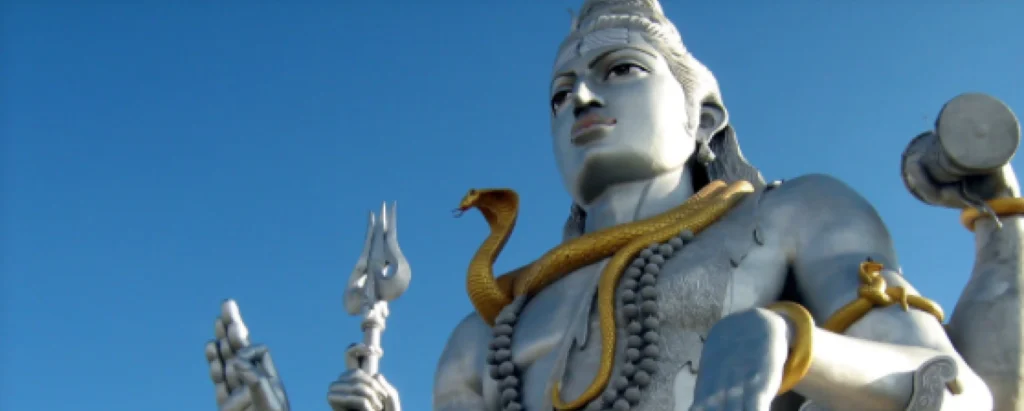
In Hinduism, the soul is called atman. It is a divine, immortal, and indestructible essence in each human. It’s believed to be the true self, not the temporary physical body and mind. The atman is a part of the universal supreme consciousness, called Brahman (God). In its pure form, the soul is identical to Brahman.
According to Hinduism, humans are souls, using their body and mind as instruments to learn and gain experience here on earth. Hinduism teaches that the divine and the material worlds are built on the same plane, and Brahman is the soul of both.
As the soul of man, Brahman is called paramatman (the real soul). It is known as the non-self. The human soul is called jivatman. It is the self or the ego and reflects the real soul. The Upanishads says the two souls dwell side-by-side within us. Paramatman is the witness consciousness, serene and detached. The human soul is the one who experiences birth and death.
Sufis have identified seven stages of soul development—from a tyrannical self to a pure self. A central Sufi saying is:
“The atman pervades all like butter hidden in milk. It is the source of self-knowledge and ascetic fervor.
“This is the Brahman teaching and the highest goal. He who, with the truth of the atman, unified, perceives the truth of Brahman as with a lamp. Who knows God, the unborn, the stable, free from all forms of being, is released from all fetters.
“The inspired self is not born nor does he die. He springs from nothing and becomes nothing. Unborn, permanent, unchanging, primordial. He is not destroyed when the body is destroyed.”
In Sufism, the soul is primarily understood as the nafs (self) and the ruh (spirit), which interact to create the individual. The nafs is the lower self, a transformable part of a human that can be influenced by desires, anger, and ego. The ruh is the divine spirit, a higher, transcendent principle. The spiritual path involves purifying the nafs and bringing it into balance with the ruh. This occurs through the heart (qalb), the point where they meet and can be refined.
Sufis have identified seven stages of soul development—from a tyrannical self to a pure self. A central Sufi saying is:
“The one who knows his nafs (soul or self), knows his Lord.”
This means that self-knowledge is a path to divine knowledge. It’s not about getting rid of the lower soul. It’s about achieving a balanced development of the whole person, including body, mind, and spirit. The goal is to purify the nafs to the point where they are at peace, in a tranquil state with a mind filled with constant remembrance of God.

The soul, according to the Bible, is the combination of the physical body and the life-giving spirit of God that makes up a human being. It is our individual personality. The soul is immortal by virtue of God’s will, and possess faculties such as reason, will, and emotions.
According to Christianity, humans have three aspects: body, spirit, and soul. A description of the soul in the bible is from Matthew and Luke:
“The soul is our very self, a medium between our spirit and our body, possessing self-consciousness, that we may have our personality.”
You must decide for yourself which definition or combination of definitions bet fit with your eternal spiritual inner knowing.
Remember who you are! Forever in spiritual freedom!
Aya Ray is an author, archivist, and educator of mystic spirituality. Contact her for interviews and articles.
(Note: Copyright © 2025 Karen Jonson/
TheInnerWisdomProject.com. All rights reserved. No part of this blog post may be copied or duplicated without the express permission of the author.